Cherub Rock
A wall of layered Big Muff fuzz over a Marshall, with a tape-doubled solo.
What is the Cherub Rock guitar tone?
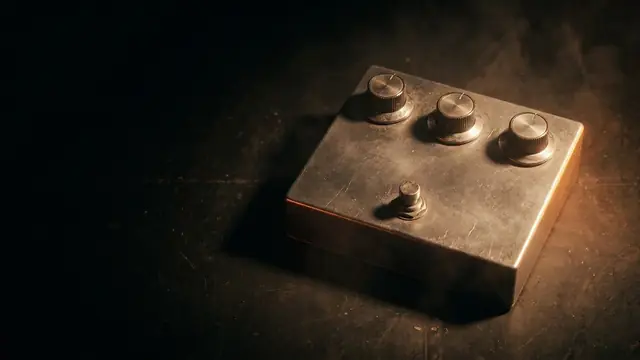
The Cherub Rock guitar tone is a wall of layered Big Muff fuzz over a Marshall, with a tape-doubled solo, heard on The Smashing Pumpkins' 1990s alt rock recording. It is a distorted riff tone, and The Smashing Pumpkins reportedly tracked it with a '57 reissue Fender Stratocaster, the guitar Billy Corgan told Guitar World in 1995 he had played on most of Siamese Dream, into the 1984 Marshall JCM800 head he called the 'soul head' and said had been used on everything the band had done; Andertons' Sound Like feature on the band says Corgan and James Iha used JCM800s heavily on Gish and Siamese Dream, that Corgan's was modified with KT88 valves, and that for the fuzz he plugged an Electro-Harmonix Big Muff, the late-1970s op-amp version, into the amp's low-gain input with the master volume cranked and used the preamp volume to find the sweet spot; the same feature says the rhythm parts were not simply double tracked but recorded four to six times for the thick, layered sound, and that Corgan used an MXR Phase 90 with its speed all the way down on his leads; producer Butch Vig told Guitar.com that a small distortion unit taken out of the studio engineer Mark Richardson's lap steel was used on a lot of the album's lead solo parts, though neither source places a unit on this song; Wikipedia says the solo's prominent effect came from recording it to two tapes run together with the speed of one slightly altered, that the song is in standard tuning with an E octave at the seventh fret that Corgan called the Pumpkin Chord, and that its overdubs draw on shoegazing and 1970s arena rock; Corgan played lead guitar and bass on the session and Iha rhythm guitar; one of the last songs written for Siamese Dream, recorded with Vig at Triclops Studios in Marietta, Georgia, mainly between December 1992 and March 1993, it opens the album, came out as its first single and was nominated for the Grammy Award for Best Hard Rock Performance. Here the wall is a Big Muff into a Marshall with its own preamp kept low, recorded four to six times over, so the size comes from the fuzz and the layers rather than from the amp's gain.
You do not need that exact gear to land in the same place. What carries this sound is the gain structure, the EQ curve, the pickup choice and the order of the effects, and all four can be rebuilt on equipment that costs a fraction of the original. The numbers change from amp to amp, because a high-gain head and a small practice amp reach the same voicing from different knob positions. That translation is what Tonelify works out for the rig you actually own.
Cherub Rock amp settings: a starting point
On a generic five-knob amp, start at Gain 3, Bass 5, Middle 5, Treble 6, Presence 5, Reverb 3 for the riff and the rhythm parts, with the bridge pickup. There is a second setting for the solo below.
- Gain 3
- Bass 5
- Middle 5
- Treble 6
- Presence 5
- Reverb 3
- Signal chain
- Electro-Harmonix Big Muff (op-amp version) into the amp's low-gain input → Rhythm parts recorded four to six times
- The control that matters most
- Fuzz into a clean-ish amp, then layers. Andertons has Corgan's Big Muff going into the JCM800's low-gain input with the master volume up and the preamp set by ear, so let a Big Muff style fuzz make the distortion, keep the amp's own gain modest, and record the rhythm part several times rather than adding more gain.
These positions are free and they are a starting point. A Katana, a Spark and a valve head reach this voicing from different knob positions, so Tonelify rewrites every value above for the amp and guitar you own. A first plan starts with 7 days free, $0 today.
Adapt these to my amp- Pickup
- Bridge pickup
These are positions on a generic five-knob amp with gain, bass, middle, treble and presence, each running 0 to 10. They are a starting point, not the settings used on the record, and they will not transfer unchanged to an amp with a different gain structure or EQ voicing. If you tell Tonelify which amp you own, it rewrites every value above for the controls that amp actually has.
Already set up for these amps
The same song on the amp's own controls: which model to select, the knob positions and the effects to use. Free to read.
Second sound
Cherub Rock amp settings for the solo
For the solo, start at Gain 3.5, Bass 5, Middle 6, Treble 6, Presence 5, Reverb 3, with the neck pickup for body, bridge if the lead needs to cut.
- Gain 3.5
- Bass 5
- Middle 6
- Treble 6
- Presence 5
- Reverb 3
- Signal chain
- MXR Phase 90 with its speed all the way down → Two tape copies run together, one slightly off speed
- Where the song switches
- Wikipedia says the solo's prominent effect came from recording it to two tapes run together with the speed of one slightly altered, and Andertons has Corgan using a Phase 90 with its speed all the way down on his leads.
- Pickup
- Neck pickup for body, bridge if the lead needs to cut
The same reference as the panel above: positions on a generic five-knob amp, a starting point rather than the settings on the record.
Does the Cherub Rock tone sound off on your amp?
Pick what you hear. You get the knobs to turn from the starting point above, and how far. It works from the setting for the riff and the rhythm parts.
What gear did The Smashing Pumpkins use on Cherub Rock?
A '57 reissue Fender Stratocaster, the guitar Billy Corgan told Guitar World in 1995 he had played on most of Siamese Dream, into the 1984 Marshall JCM800 head he called the 'soul head' and said had been used on everything the band had done; Andertons' Sound Like feature on the band says Corgan and James Iha used JCM800s heavily on Gish and Siamese Dream, that Corgan's was modified with KT88 valves, and that for the fuzz he plugged an Electro-Harmonix Big Muff, the late-1970s op-amp version, into the amp's low-gain input with the master volume cranked and used the preamp volume to find the sweet spot; the same feature says the rhythm parts were not simply double tracked but recorded four to six times for the thick, layered sound, and that Corgan used an MXR Phase 90 with its speed all the way down on his leads; producer Butch Vig told Guitar.com that a small distortion unit taken out of the studio engineer Mark Richardson's lap steel was used on a lot of the album's lead solo parts, though neither source places a unit on this song; Wikipedia says the solo's prominent effect came from recording it to two tapes run together with the speed of one slightly altered, that the song is in standard tuning with an E octave at the seventh fret that Corgan called the Pumpkin Chord, and that its overdubs draw on shoegazing and 1970s arena rock; Corgan played lead guitar and bass on the session and Iha rhythm guitar; one of the last songs written for Siamese Dream, recorded with Vig at Triclops Studios in Marietta, Georgia, mainly between December 1992 and March 1993, it opens the album, came out as its first single and was nominated for the Grammy Award for Best Hard Rock Performance.
Sources: Guitar World: the Smashing Pumpkins on '80s Marshalls and their essential pedals (1995), Andertons: Sound Like the Smashing Pumpkins, Guitar.com: Butch Vig on the effects box used on Siamese Dream, Wikipedia: Cherub Rock, Wikipedia: Siamese Dream
Tonelify's tone matcher reads that chain and translates it to the amp and guitar you already own, returning gain, bass, mids, treble and presence values along with a pickup position.
How do you get the Cherub Rock tone on your own amp?
Tell us your guitar, amp, and pedals
AI researches the original tone of Cherub Rock
Get exact knob settings adapted to your rig
Cherub Rock tone questions
What amp settings do you need for Cherub Rock?
On a generic five-knob amp, start at Gain 3, Bass 5, Middle 5, Treble 6, Presence 5, Reverb 3 for the riff and the rhythm parts, with the bridge pickup, and at Gain 3.5, Bass 5, Middle 6, Treble 6, Presence 5, Reverb 3 for the solo, with the neck pickup for body, bridge if the lead needs to cut. These are positions on a generic five-knob amp with gain, bass, middle, treble and presence, each running 0 to 10. They are a starting point, not the settings used on the record, and they will not transfer unchanged to an amp with a different gain structure or EQ voicing. Tonelify rewrites the same values for the specific amp and guitar you own, because a high-gain head and a small solid-state combo reach the same wall of layered Big Muff fuzz over a Marshall, with a tape-doubled solo from different positions.
Does Cherub Rock use one amp setting or two?
Two. Wikipedia says the solo's prominent effect came from recording it to two tapes run together with the speed of one slightly altered, and Andertons has Corgan using a Phase 90 with its speed all the way down on his leads. On a generic five-knob amp, start at Gain 3, Bass 5, Middle 5, Treble 6, Presence 5, Reverb 3 for the riff and the rhythm parts, and at Gain 3.5, Bass 5, Middle 6, Treble 6, Presence 5, Reverb 3 for the solo.
What amp did Billy Corgan use on Cherub Rock?
Amp: 1984 Marshall JCM800 head, Corgan's 'soul head'. Guitar: Fender '57 reissue Stratocaster, Corgan's main guitar on the album. Sources: Guitar World, Andertons, Guitar.com and Wikipedia.
What were Billy Corgan's amp settings on Cherub Rock?
None of the sources cited on this page gives Billy Corgan's full amp settings on Cherub Rock. The numbers here are a starting point for that kind of part, not the settings from the session, and Tonelify rewrites them for the amp and guitar you own.
How do you get Billy Corgan's tone on Cherub Rock?
Fuzz into a clean-ish amp, then layers. Andertons has Corgan's Big Muff going into the JCM800's low-gain input with the master volume up and the preamp set by ear, so let a Big Muff style fuzz make the distortion, keep the amp's own gain modest, and record the rhythm part several times rather than adding more gain. Play it with the bridge pickup.
What tuning is Cherub Rock in?
Standard tuning: E A D G B E, low string to high, according to Wikipedia.
Source: Wikipedia: Cherub Rock
Can you get the Cherub Rock tone without the original gear?
Yes. The parts that define the sound are the gain structure, the EQ curve, the pickup position and the effects order, and those translate to other equipment. Tonelify's adaptation step works them out for the amp and guitar you own.
Does Tonelify cost anything to try?
A match for your own gear takes a plan, and a first plan starts with 7 days free with nothing charged that day: Stage is $6.99 a month for 20 matches, Headliner is $10.99 a month for unlimited matching within a fair use limit of 150 new matches a day, and yearly billing works out cheaper on both. Reading this page and the rest of the library costs nothing and needs no account.