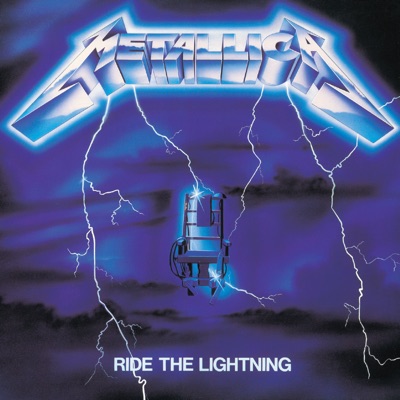
...And Justice for All
A mid-paced, scooped thrash riff built on a drum pattern.
What is the ...And Justice for All guitar tone?
The ...And Justice for All guitar tone is a mid-paced, scooped thrash riff built on a drum pattern, heard on Metallica's 1980s thrash metal recording. It is a distorted riff tone, and Metallica reportedly tracked it with the 1987 ESP MX220 that Ground Guitar calls James Hetfield's main guitar of the ...And Justice for All era, in the studio and on tour, a mahogany guitar with a set neck and active EMG 81 and 60 pickups; Hetfield told Guitar World in 1991 that he had used the same Mesa/Boogie Mark II on the last three albums, which Ground Guitar describes as a Mark IIC+ he borrowed from Kirk Hammett and Metallica Gear History as the Mark IIC++ he borrowed from Hammett after Master of Puppets, his primary recording amp on this album and the Black Album, though no source read here places an amp on this song alone; in the same interview he said his tone on Justice was very scooped, all lows and highs with very little midrange, that it ate up the lower frequencies once his rhythm parts were in the mix, and that his Justice sound lacked body; Wikipedia says producer Flemming Rasmussen joined the sessions six weeks in, in March, and that his first task was to adjust the guitar sound, which the band was unhappy with, and that the album is known for its dry mix and nearly inaudible bass; Hetfield played rhythm guitar and Hammett lead; the main riff is based on a drum pattern written by Lars Ulrich, and critic Cosmo Lee called the song mid-paced and very playable, with none of its riffs that technical; it is the album's second track and was released as a promotional single in 1988, from an album recorded at One on One in Los Angeles between 30 January and 23 May 1988 and released on 7 September; the band did not play it from October 1989 until the Sick of the Studio '07 tour, and live the intro is played from a recording because it needs three guitars. Tones in this style live or die on tight low end and a scooped midrange, with the picking hand doing as much of the work as the amp.
You do not need that exact gear to land in the same place. What carries this sound is the gain structure, the EQ curve, the pickup choice and the order of the effects, and all four can be rebuilt on equipment that costs a fraction of the original. The numbers change from amp to amp, because a high-gain head and a small practice amp reach the same voicing from different knob positions. That translation is what Tonelify works out for the rig you actually own.
...And Justice for All amp settings: a starting point
On a generic five-knob amp, start at Gain 8, Bass 6, Middle 3, Treble 7, Presence 6, Reverb 1, with the bridge pickup.
- Gain 8
- Bass 6
- Middle 3
- Treble 7
- Presence 6
- Reverb 1
- Signal chain
- Mesa/Boogie Mark II distortion, scooped (album era)
- The control that matters most
- The scoop, but not all of it. Hetfield said his Justice tone was all lows and highs with very little midrange, and later that it lacked body, so cut the middle well down for the record's sound, keep the bass where the palm mutes stay tight, and keep the gain where the riff stays readable. The intro is three guitars layered, which no single amp setting gives you.
These positions are free and they are a starting point. A Katana, a Spark and a valve head reach this voicing from different knob positions, so Tonelify rewrites every value above for the amp and guitar you own. A first plan starts with 7 days free, $0 today.
Adapt these to my amp- Pickup
- Bridge pickup
These are positions on a generic five-knob amp with gain, bass, middle, treble and presence, each running 0 to 10. They are a starting point, not the settings used on the record, and they will not transfer unchanged to an amp with a different gain structure or EQ voicing. If you tell Tonelify which amp you own, it rewrites every value above for the controls that amp actually has.
Does the ...And Justice for All tone sound off on your amp?
Pick what you hear. You get the knobs to turn from the starting point above, and how far.
What gear did Metallica use on ...And Justice for All?
The 1987 ESP MX220 that Ground Guitar calls James Hetfield's main guitar of the ...And Justice for All era, in the studio and on tour, a mahogany guitar with a set neck and active EMG 81 and 60 pickups; Hetfield told Guitar World in 1991 that he had used the same Mesa/Boogie Mark II on the last three albums, which Ground Guitar describes as a Mark IIC+ he borrowed from Kirk Hammett and Metallica Gear History as the Mark IIC++ he borrowed from Hammett after Master of Puppets, his primary recording amp on this album and the Black Album, though no source read here places an amp on this song alone; in the same interview he said his tone on Justice was very scooped, all lows and highs with very little midrange, that it ate up the lower frequencies once his rhythm parts were in the mix, and that his Justice sound lacked body; Wikipedia says producer Flemming Rasmussen joined the sessions six weeks in, in March, and that his first task was to adjust the guitar sound, which the band was unhappy with, and that the album is known for its dry mix and nearly inaudible bass; Hetfield played rhythm guitar and Hammett lead; the main riff is based on a drum pattern written by Lars Ulrich, and critic Cosmo Lee called the song mid-paced and very playable, with none of its riffs that technical; it is the album's second track and was released as a promotional single in 1988, from an album recorded at One on One in Los Angeles between 30 January and 23 May 1988 and released on 7 September; the band did not play it from October 1989 until the Sick of the Studio '07 tour, and live the intro is played from a recording because it needs three guitars.
Sources: Guitar World: Metallica's 1991 interview on the Black Album, Ground Guitar: James Hetfield's guitars and gear, Ground Guitar: James Hetfield's Mesa/Boogie Mark IIC+, Metallica Gear History: the Crunchberries Mark IIC+ and the IIC++, Wikipedia: ...And Justice for All (song), Wikipedia: ...And Justice for All
James Hetfield's amps and guitars on every album →Tonelify's tone matcher reads that chain and translates it to the amp and guitar you already own, returning gain, bass, mids, treble and presence values along with a pickup position.
How do you get the ...And Justice for All tone on your own amp?
Tell us your guitar, amp, and pedals
AI researches the original tone of ...And Justice for All
Get exact knob settings adapted to your rig
...And Justice for All tone questions
What amp settings do you need for ...And Justice for All?
On a generic five-knob amp, start at Gain 8, Bass 6, Middle 3, Treble 7, Presence 6, Reverb 1, with the bridge pickup. These are positions on a generic five-knob amp with gain, bass, middle, treble and presence, each running 0 to 10. They are a starting point, not the settings used on the record, and they will not transfer unchanged to an amp with a different gain structure or EQ voicing. Tonelify rewrites the same values for the specific amp and guitar you own, because a high-gain head and a small solid-state combo reach the same mid-paced, scooped thrash riff built on a drum pattern from different positions.
What amp did James Hetfield use on ...And Justice for All?
Amp: Album era (a Mesa/Boogie Mark II (a IIC+ or a IIC++, accounts differ)). Guitar: ESP MX220 with EMG 81 and 60 pickups, his main guitar of the Justice era. Sources: Guitar World, Ground Guitar, Metallica Gear History and Wikipedia.
What were James Hetfield's amp settings on ...And Justice for All?
None of the sources cited on this page gives James Hetfield's full amp settings on ...And Justice for All. The numbers here are a starting point for that kind of part, not the settings from the session, and Tonelify rewrites them for the amp and guitar you own.
How do you get James Hetfield's tone on ...And Justice for All?
The scoop, but not all of it. Hetfield said his Justice tone was all lows and highs with very little midrange, and later that it lacked body, so cut the middle well down for the record's sound, keep the bass where the palm mutes stay tight, and keep the gain where the riff stays readable. The intro is three guitars layered, which no single amp setting gives you. Play it with the bridge pickup.
Can you get the ...And Justice for All tone without the original gear?
Yes. The parts that define the sound are the gain structure, the EQ curve, the pickup position and the effects order, and those translate to other equipment. Tonelify's adaptation step works them out for the amp and guitar you own.
Does Tonelify cost anything to try?
A match for your own gear takes a plan, and a first plan starts with 7 days free with nothing charged that day: Stage is $6.99 a month for 20 matches, Headliner is $10.99 a month for unlimited matching within a fair use limit of 150 new matches a day, and yearly billing works out cheaper on both. Reading this page and the rest of the library costs nothing and needs no account.
Guides for this sound
 Metallica tone on a Fender Mustang LT25: settings song by songMetallica settings for the Fender Mustang LT25: SUPER HEAVY for the thrash rhythm, TWIN CLEAN for the clean songs, and the model for 17 Metallica songs.
 Metallica tone on a Boss Katana: settings song by songMetallica settings for the Boss Katana 50 and 100: Lead with Mid Boost for the thrash rhythm, Clean for the clean songs, and the setup for 17 Metallica songs.