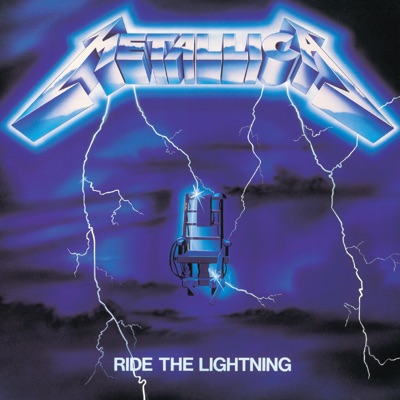
Master of Puppets
Scooped mids, razor-tight palm-muted chug.
What is the Master of Puppets guitar tone?
The Master of Puppets guitar tone is scooped mids, razor-tight palm-muted chug, heard on Metallica's 1980s thrash metal recording. It is a distorted riff tone, and Metallica reportedly tracked it with James Hetfield's Jackson King V through a Mesa/Boogie Mark IIC+ used as a preamp into Marshall heads and 4x12 cabinets, recorded with Flemming Rasmussen at Sweet Silence Studios in Copenhagen. Tones in this style live or die on tight low end and a scooped midrange, with the picking hand doing as much of the work as the amp.
You do not need that exact gear to land in the same place. What carries this sound is the gain structure, the EQ curve, the pickup choice and the order of the effects, and all four can be rebuilt on equipment that costs a fraction of the original. The numbers change from amp to amp, because a high-gain head and a small practice amp reach the same voicing from different knob positions. That translation is what Tonelify works out for the rig you actually own.
Master of Puppets amp settings: a starting point
On a generic five-knob amp, start at Gain 8, Bass 6, Middle 3, Treble 7, Presence 6, Reverb 1, with the bridge pickup.
- Gain 8
- Bass 6
- Middle 3
- Treble 7
- Presence 6
- Reverb 1
- Signal chain
- Noise gate → Amp distortion → Short room reverb
- The control that matters most
- Middle. Thrash lives in the cut, but taking it past a 3 costs the definition that keeps fast downpicking readable.
These positions are free and they are a starting point. A Katana, a Spark and a valve head reach this voicing from different knob positions, so Tonelify rewrites every value above for the amp and guitar you own. Your first match is free with an account, and needs no card.
Adapt these to my amp- Pickup
- Bridge pickup
These are positions on a generic five-knob amp with gain, bass, middle, treble and presence, each running 0 to 10. They are a starting point, not the settings used on the record, and they will not transfer unchanged to an amp with a different gain structure or EQ voicing. If you tell Tonelify which amp you own, it rewrites every value above for the controls that amp actually has.
What gear did Metallica use on Master of Puppets?
James Hetfield's Jackson King V through a Mesa/Boogie Mark IIC+ used as a preamp into Marshall heads and 4x12 cabinets, recorded with Flemming Rasmussen at Sweet Silence Studios in Copenhagen.
Sources: Wikipedia: Master of Puppets, Metallica Gear History: the Crunchberries Mark IIC+, gearnews: how to sound like Master of Puppets
Tonelify reads that chain and translates it to the amp and guitar you already own, returning gain, bass, mids, treble and presence values along with a pickup position.
How do you get the Master of Puppets tone on your own amp?
Tell us your guitar, amp, and pedals
AI researches the original tone of Master of Puppets
Get exact knob settings adapted to your rig
Master of Puppets tone questions
What amp settings do you need for Master of Puppets?
On a generic five-knob amp, start at Gain 8, Bass 6, Middle 3, Treble 7, Presence 6, Reverb 1, with the bridge pickup. These are positions on a generic five-knob amp with gain, bass, middle, treble and presence, each running 0 to 10. They are a starting point, not the settings used on the record, and they will not transfer unchanged to an amp with a different gain structure or EQ voicing. Tonelify rewrites the same values for the specific amp and guitar you own, because a high-gain head and a small solid-state combo reach the same scooped mids, razor-tight palm-muted chug from different positions.
What is the most important control for the Master of Puppets tone?
Middle. Thrash lives in the cut, but taking it past a 3 costs the definition that keeps fast downpicking readable.
Can you get the Master of Puppets tone without the original gear?
Yes. The original was tracked with James Hetfield's Jackson King V through a Mesa/Boogie Mark IIC+ used as a preamp into Marshall heads and 4x12 cabinets, recorded with Flemming Rasmussen at Sweet Silence Studios in Copenhagen, but the parts that define the sound are the gain structure, the EQ curve, the pickup position and the effects order. Those translate to other equipment, which is what the adaptation step does.
Is Master of Puppets a rhythm or a lead tone?
It is a riff part with a distorted character, from Metallica's 1980s thrash metal catalogue.
Does Tonelify cost anything to try?
Your first match for your own gear is free with an account, and needs no card. After that both plans start with a 7-day free trial: Stage is $6.99 a month for 20 matches, Headliner is $10.99 a month for unlimited matching within a fair use limit of 150 new matches a day, and yearly billing works out cheaper on both. Reading this page and the rest of the library costs nothing and needs no account.
Guides for this sound
 What does scooping the mids mean?Scooping the mids means cutting the middle knob with bass and treble high, like Bass 6, Middle 2, Treble 8. Why it sounds huge alone and vanishes in a band.
 How to get a metal tone on any ampTight low end, controlled gain, mids you can hear and a gate. How to get a usable metal tone out of a practice amp, a modelling combo or a valve head.
 How to get any song's guitar tone on the amp you ownFind the documented rig, match the amp family, set the gain lower than you think and EQ against the record. A seven-step method, worked on a Boss Katana.
 AI guitar tone apps compared: matchers, modellers and chatbotsSong-to-your-amp matchers, AI modellers, captures and chatbots: what each kind of AI guitar tone tool does, what it needs, and how to test any of them.